Does Every Example Need an Exception? What Axioms Are and Why Rules Change
Not every rule is born from exceptions. Axioms are the zero point where rules begin — and sometimes, they change everything
Does Every Example Need an Exception?
No. What looks like an “exception” is usually just a different context.
The problem is that we learn rules as if they were absolute truths — when in fact they are truths within a specific system.
For example:
- “Triangles have 180° of internal angles” → True… on a plane. On a sphere? False.
- “You can’t divide by zero” → True… in standard arithmetic. In some mathematical systems? You can.
- “The shortest path between two points is a straight line” → True… on a plane. On a globe? The shortest path is a curve.
These aren’t exceptions. They are different systems with different rules (axioms).
When I understood this, I stopped seeing mathematics as “formula memorization” and started seeing it as the construction of logical worlds.

What Are Axioms?
An axiom is a basic rule that you accept as true without proof.
It’s like the “rules of the game” before you start playing.
Example: Euclidean Geometry
Euclid (around 300 BC) built all of geometry on top of five axioms. One of them:
“Through a point outside a line, there passes exactly one line parallel to the given line.”
It feels obvious, right? But it’s a choice. You could choose differently.
Non-Euclidean (Spherical) Geometry
Mathematically, you can change that axiom to:
“Through a point outside a line, no parallel lines pass.”
And suddenly you invent spherical geometry — where all “lines” (geodesics) eventually meet.
Result: triangles on a sphere have more than 180°.
It’s not an exception. It’s another system.
Practical Examples of “Exceptions” That Aren’t Exceptions
1. Modular Arithmetic (Clocks)
On a 12-hour clock:
- 11 + 2 = 1 (not 13)
- 8 + 7 = 3 (not 15)
“But that’s wrong!”
No. It’s correct in modulo 12 arithmetic. The axioms changed — now numbers “wrap around” after 12.
2. Binary System
In binary (base 2):
- 1 + 1 = 10 (not 2)
- 10 + 10 = 100 (not 20)
Again: not an exception. Just a different counting system.
3. Non-Classical Logics
In classical logic:
- A statement is either true or false (law of the excluded middle)
In fuzzy logic:
- A statement can be “50% true”
- Or “70% true”
Not an exception — just logic with different axioms, widely used in AI and control systems.
Why Does This Matter?
Because we often confuse “true in system X” with “absolute truth.”
So when we encounter something that contradicts it, we assume it’s an “exception” or a mistake.
But it’s not. It’s just that the system changed.
Everyday Example:
You learn: “You can’t divide by zero.”
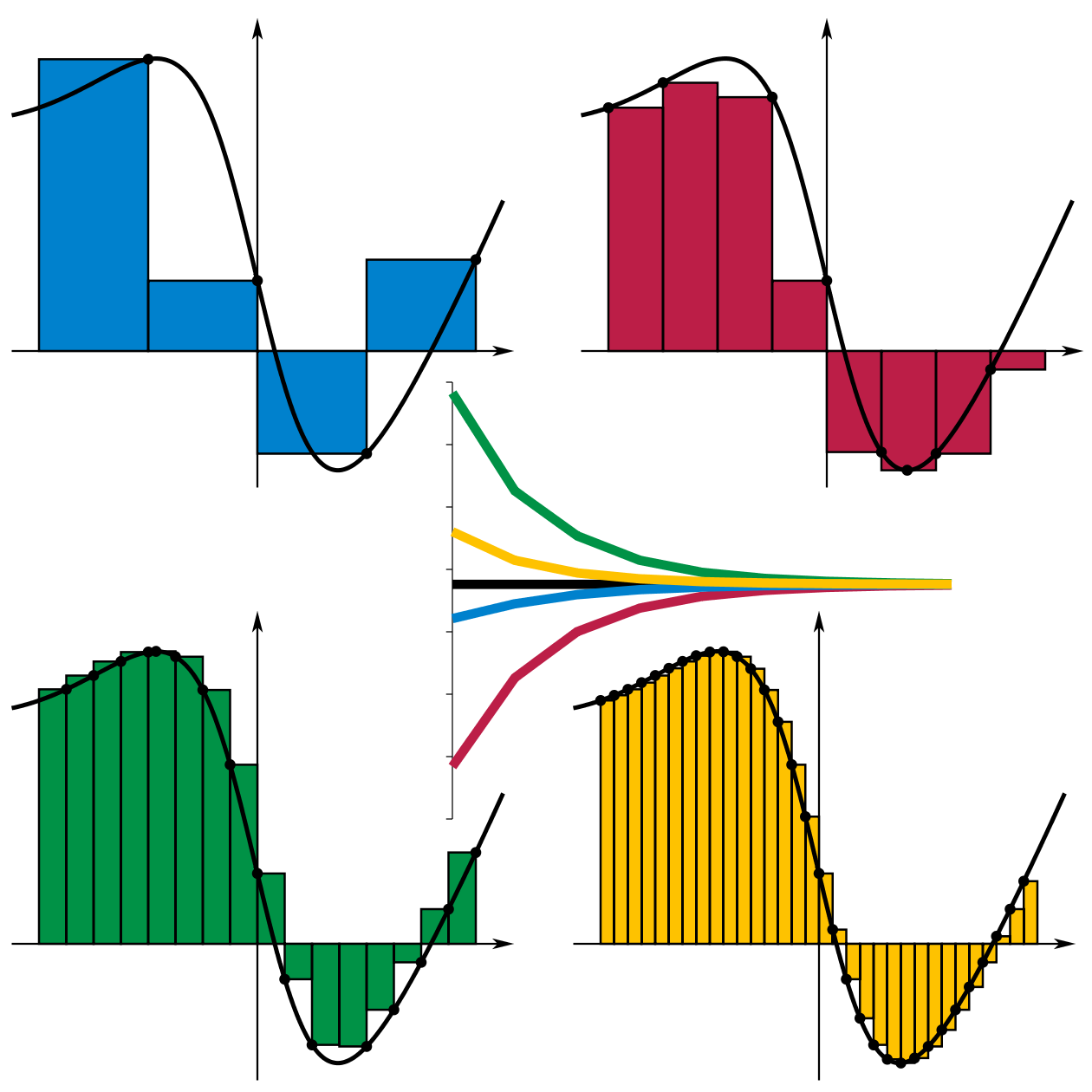
Then someone says: “In Riemann sums, you can divide by zero.”
Your reaction: “Wait, wasn’t that forbidden?”
Answer: It was forbidden in the real numbers. In Riemann sums (a different mathematical framework), the rules change.
Axioms Are Choices, Not Discoveries
Here’s the key insight that took me a while to grasp:
Axioms are not ‘discovered’ — they are chosen.
Mathematicians decide the basic rules and then explore their consequences.
It’s like video games:
- Minecraft has rules (blocks, limited gravity)
- GTA has different rules (realistic physics, cars)
- Tetris has completely different rules
None of them are “wrong.” They are universes with their own internal logic.
Euclidean and non-Euclidean geometry are the same in this sense — mathematical universes with different rules.
So… Is Everything Relative?
No.
Within a system with well-defined axioms, the consequences are absolute.
Example:
- If you accept the Peano axioms (natural numbers)
- Then 1 + 1 = 2 is necessarily true
But if you change the axioms (like arithmetic modulo 2), the result changes.
Relativity lies in the axioms. The logic that follows is rigid.
Questions I Had (and the Answers)
“So is mathematics invented or discovered?”
Both. Axioms are invented (chosen). Logical consequences are discovered.
“How do we know which axioms to use?”
It depends on what you want to model. Euclidean geometry works for small maps. Spherical geometry works for global GPS.
“Can axioms be contradictory?”
Within the same system, no. But different systems can have incompatible axioms — and that’s fine.
“Why isn’t this taught in school?”
Good question. Probably because it’s easier to teach “fixed rules” than “contextual systems.” But understanding axioms changes everything.
Why This Fascinated Me
Because I realized that many disagreements are really just different systems.
Two people can both be logically correct — they’re just using different axioms.
Philosophical example:
- Person A: “Abortion is wrong” (axiom: life begins at conception)
- Person B: “Abortion is a right” (axiom: bodily autonomy is absolute)
It’s not that one is right and the other wrong. They’re ethical systems with different axioms.
Understanding this doesn’t solve the debate — but it helps identify where the real disagreement lies (in the axioms, not the logical conclusions).
💡 Summary in 3 Points:
- Axioms are basic rules assumed without proof — the foundation of any logical system
- “Exceptions” are usually just results of systems with different axioms
- Within a system, consequences are absolute — but you can always choose another system
Enjoyed understanding how logical systems work? I wrote about another concept that seems obvious but isn’t. Check out the post about 1 + 1 = 2 (or not?) — it explores how even basic arithmetic depends on axioms.
References:
-
Stanford Encyclopedia: Axioms plato.stanford.edu
-
Matemática Rio: Peano Axioms matematicario.com.br
- STEWART, Ian. Amazing Mathematical Puzzles. Zahar, 2010.
Personal note: I want to study more about axioms in set theory (ZFC) and the Axiom of Choice — apparently some mathematicians accept it, others reject it, creating “parallel mathematics.” Fascinating and slightly terrifying at the same time. That’s for another post.