How does the classification of living beings work? From kingdom to species explained
classification of living beings, taxonomy, kingdom phylum class order, Linnaeus taxonomy, binomial nomenclature, species genus family
How does the classification of living beings work?
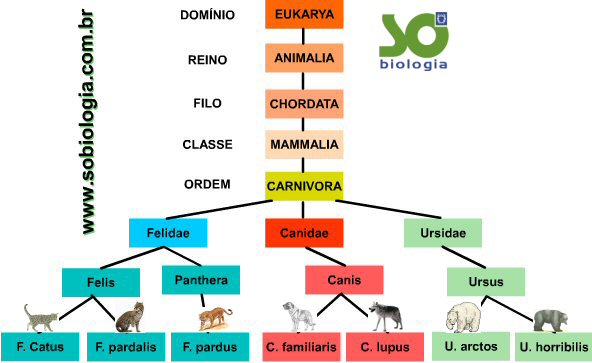
The classification of living beings organizes all organisms into hierarchical categories — from the most comprehensive (Kingdom) to the most specific (Species). It’s like a system of folders inside folders: Kingdom > Phylum > Class > Order > Family > Genus > Species.
Each level groups organisms with increasingly similar characteristics. The deeper you go in the hierarchy, the more specific it becomes.
Quick example: you and a chimpanzee are in the same Kingdom (Animalia), but in different Species. You and your dog are in the same Phylum (Chordata), but in different Classes.
I needed to understand this better for a project, so I decided to organize it into a note — and I’m sharing it here as well.
Why do we classify living beings?
Because there are millions of species on the planet (an estimated 8.7 million, and most have not even been discovered yet).
Without organization, it would be total chaos. How would you talk about a specific ant species without confusing it with the other 12,000 species of ants?
Classification helps to:
✅ Organize biodiversity logically
✅ Communicate — scientists all over the world use the same names
✅ Understand evolution — shows who is related to whom
✅ Facilitate studies — groups similar organisms
It is basically a universal library of life.
The hierarchy: Kingdom → Phylum → Class → Order → Family → Genus → Species
I’ll use an example everyone knows: the dog.
| Category | Example (dog) | What it groups |
|---|---|---|
| Kingdom | Animalia | All animals |
| Phylum | Chordata | Animals with a vertebral column |
| Class | Mammalia | Mammals (have hair, nurse their young) |
| Order | Carnivora | Carnivores (teeth adapted for meat) |
| Family | Canidae | Canids (wolves, foxes, dogs) |
| Genus | Canis | Dogs, wolves, coyotes |
| Species | Canis familiaris | Domestic dog |
Notice how it narrows down? At the Kingdom level, the dog is grouped with fish, insects, and humans. At the Species level, only domestic dogs.
To memorize the order, there’s a famous mnemonic:
“King Philip Came Over For Good Soup”
- Kingdom
- Phylum
- Class
- Order
- Family
- Genus
- Species
(You can make up your own — it works better when you create it)
Who invented this? Linnaeus and the binomial system
The system we use today was created by Carl von Linné (Linnaeus), a Swedish botanist, in 1735.
He published the book Systema Naturae and revolutionized biology by proposing:
1. Binomial nomenclature
Every living being has a scientific name composed of two parts:
- Genus (first word, capitalized)
- Species (second word, lowercase)
Both are written in Latin (or Latinized) and in italics or underlined.
Examples:
- Human = Homo sapiens
- Dog = Canis familiaris
- Wolf = Canis lupus
- Jaguar = Panthera onca
Notice that dogs and wolves share the same genus (Canis) — because they are evolutionarily close.
2. Hierarchical system
Linnaeus organized living beings into categories of increasing similarity. Originally there were 5 categories (Kingdom, Class, Order, Genus, Species). Later, Phylum and Family were added, reaching the current 7.

But Linnaeus didn’t know about evolution
This is where it gets interesting.
Linnaeus classified living beings based on physical characteristics (anatomy, morphology). He was a fixist — he believed species were created as they are and did not change.
But in 1859, Charles Darwin published On the Origin of Species and showed that:
- Species evolve
- Similar organisms are similar because they share common ancestors
So Linnaeus’s classification, made without knowledge of evolution, ended up reflecting evolutionary relationships by accident. Similar organisms tend to be closely related.
Modern classification: phylogeny
Today, besides physical traits, we use genetics and evolutionary analysis (phylogeny) to classify organisms.
We build phylogenetic trees (cladograms) that show how species branched from common ancestors.
In 2020, scientists even proposed a new system called PhyloCode, which organizes everything based only on evolution. But Linnaeus’s system is still the global standard.
The 5 Kingdoms (and later the 3 Domains)
Originally, Linnaeus divided everything into 3 kingdoms: Mineral, Plant, and Animal.
Later, advances in microscopy and genetics showed this was far too simplistic.
5 Kingdom system (Whittaker, 1969)
- Monera — bacteria and cyanobacteria (no nucleus)
- Protista — protozoa, unicellular algae
- Fungi — fungi (mushrooms, yeasts)
- Plantae — plants
- Animalia — animals
3 Domain system (Woese, 1990)
Later it was discovered that some “bacteria” were so different that they deserved their own group. A category above Kingdom was created:
- Bacteria — “regular” bacteria
- Archaea — extremophile bacteria (live in extreme environments)
- Eukarya — all organisms with nucleated cells (protists, fungi, plants, animals)
Today we use both systems — Domains > Kingdoms > Phyla > …
Practical examples to fix it
Human
- Kingdom: Animalia
- Phylum: Chordata
- Class: Mammalia
- Order: Primates
- Family: Hominidae
- Genus: Homo
- Species: Homo sapiens
Leafcutter ant
- Kingdom: Animalia
- Phylum: Arthropoda
- Class: Insecta
- Order: Hymenoptera
- Family: Formicidae
- Genus: Atta
- Species: Atta sexdens
Tomato
- Kingdom: Plantae
- Phylum: Angiosperms
- Class: Eudicots
- Order: Solanales
- Family: Solanaceae
- Genus: Solanum
- Species: Solanum lycopersicum
Notice how classification tells you who is related to whom.
Tomatoes and potatoes belong to the same Family, which is why they share characteristics (and why tomato leaves are toxic, just like green potatoes).
Questions I had (and the answers)
“Why use Latin?”
Because it’s a “dead language” — it no longer changes. This ensures scientific names are universal and permanent, regardless of country or language.
“Why are some names so weird?”
Many scientific names honor discoverers, places, or describe traits. Atta sexdens = ant with “six teeth” (mandibles). Tyrannosaurus rex = “tyrant lizard king”.
“What if they discover it was classified wrong?”
It happens! With genetics, many organisms were reclassified. Example: mushrooms used to be considered plants, but genetically they are closer to animals. That’s why they now have their own Kingdom (Fungi).
“Do subspecies exist?”
Yes! They use trinomial nomenclature. Example: the domestic cat can be considered a subspecies of the wildcat: Felis silvestris catus.
Final thoughts
When I first studied this, I thought it was just boring school memorization.
But when I realized classification tells the story of life — who evolved from whom, who is a distant cousin of whom — it became fascinating.
Like this: you and a lettuce share a common ancestor. Very distant (billions of years ago), but shared.
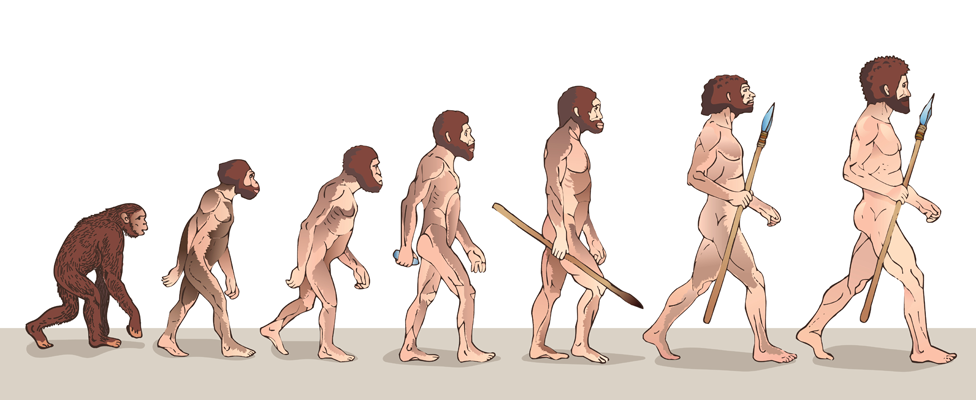
The classification of living beings is not just about organizing names. It is about mapping 3.5 billion years of evolution.
And that is insanely beautiful.
💡 3-point summary:
- Classification organizes living beings into 7 hierarchical levels: Kingdom > Phylum > Class > Order > Family > Genus > Species
- Linnaeus created the system in 1735, before knowing about evolution — yet it still worked
- Today we use genetics + evolution to refine classification and understand relationships between species
Enjoyed learning how we organize life? I’ve written about other concepts that seem simple but have depth. Check out the post about 0.999… = 1 — it’s about how infinity breaks our mathematical intuition.
References:
-
Toda Matéria: Classification of Living Beings todamateria.com.br
-
USP: Living beings gain new classification after 285 years jornal.usp.br
-
Ponto Biologia: Taxonomy pontobiologia.com.br
Personal note: I need to study more about cladistics and PhyloCode. The new system seems more accurate, but also more complex. And I want to better understand why fungi are genetically closer to animals — that blew my mind. That’s for another post on evolution.